At United Parents, we wanted to understand exactly why school transport feels so broken, and more importantly, what would actually help fix it. So we surveyed almost 120 parents across the UK, conducted in-depth interviews with dozens of teachers, governors, and councils, and the conversations we had were eye-opening.
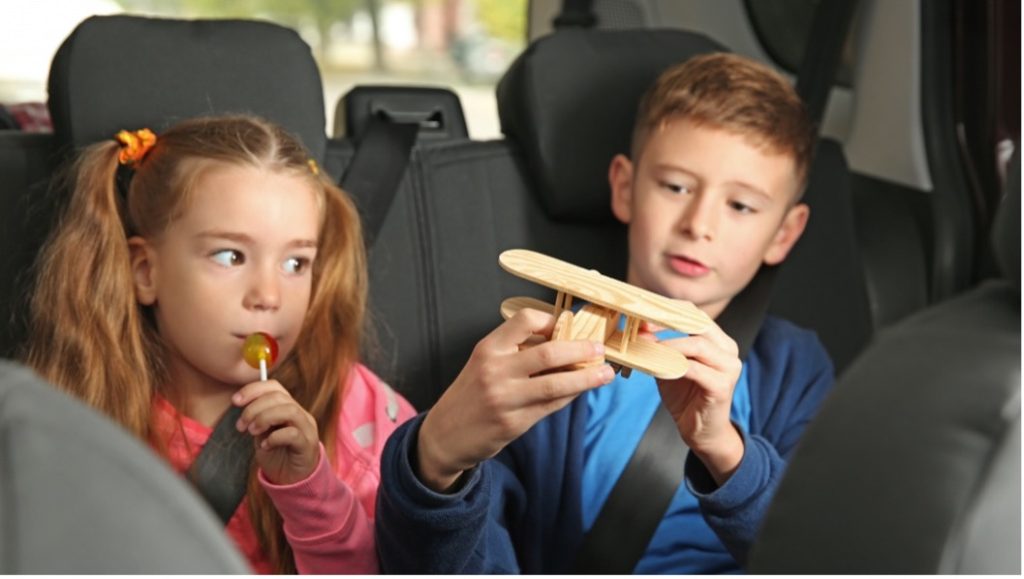
The school run looks simple from the outside: just drop the kids off and carry on with your day. But if you’re a parent you know the reality is far messier.
The mistakes we’re all making with school run planning
Let’s be honest: most of us are winging it when it comes to school transport. We knew the school run was stressful, but our research revealed just how much we’re all getting it wrong.
59% of UK parents actively dislike the school run, primarily due to road congestion. In London alone, anywhere from 27% to 43% of rush-hour traffic is directly linked to school pick-ups and drop-offs. We’re quite literally creating the problem we’re complaining about.
And it’s not just environmental: across the pond, almost 1 in 3 parents feel they’ve put their job at risk to manage children’s transportation. While UK data is harder to come by, the conversations we had suggest the career impact here is significant too, particularly for mothers.
One parent told us: “I’m already dreading school drop-offs with my next child because of parking issues.”
The biggest mistake? We’re all trying to solve this individually when it’s fundamentally a community problem.
The hidden cost of our current system
Here’s what really shocked us: UK school runs generate around 2.5 million tonnes of CO₂ every year. To put that in perspective, that’s equivalent to taking nearly 600,000 cars off the road entirely.
Even worse, children experience their highest daily exposure to air pollution during school runs. We’re literally driving our kids through the most polluted air of their day, twice a day, five days a week.
The British hesitancy to ask for help
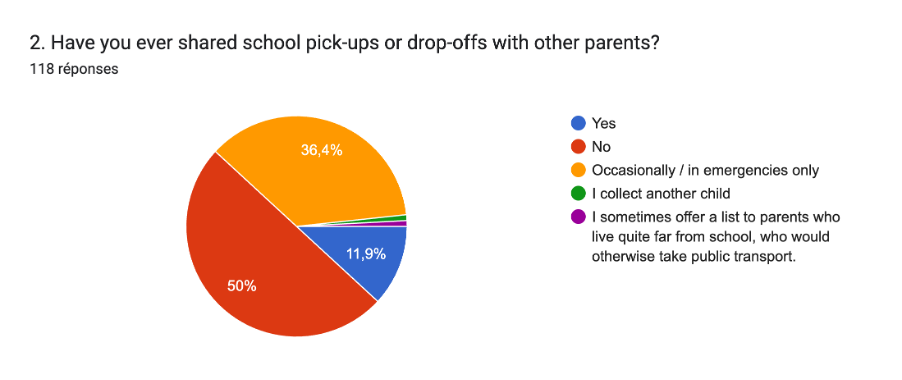
This was perhaps our most fascinating finding (as a non-Brit). Our research confirmed what many families already suspect: carpooling sounds obvious, but it rarely happens in practice.
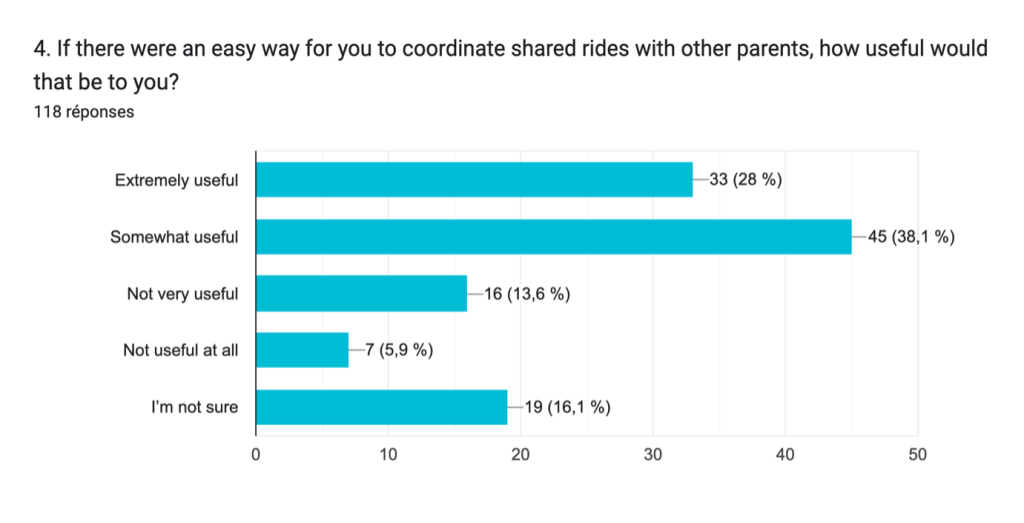
Only 12% of parents surveyed currently share school runs, but here’s the twist: About 85% said they would try a trusted school-run carpooling app if it was launched in their schools.
One parent captured it perfectly: “If a neighbour asked for my help, I would not hesitate, and I know it goes the other way. But we won’t ask: this is part of the British culture, we won’t admit we need help, but this solution would help tackle this.”
What parents are saying
We asked what parents thought of a parent-to-parent carpooling app for school runs, and this is what they said:
The maths is simple: two families sharing one car for four journeys instead of using two cars for eight journeys. It’s the fastest, cheapest way to dramatically reduce your family’s transport emissions.
If just 20% of school-run journeys were shared, the UK could save 135,000 tonnes of CO₂ each year while actually reducing pressure on both families and local authorities.
Plus, you’re not just helping the environment: you’re helping another parent who’s probably dealing with exactly the same stress you are.
The school run has evolved, communities have changed, but the tools to coordinate and share haven’t kept up. We’re using 20th-century approaches to solve 21st-century problems. The phrase “it takes a village to raise a child” isn’t just a nice saying: it’s how humans have always done this. But modern life has made villages harder to find and harder to coordinate.
If you’re interested in being part of the solution, you can still take our survey here to add your voice to the research. Every response helps us understand the challenges families face and build better solutions.
We’re also working with schools to pilot new approaches to school transport. If you think your school community would benefit from trying a carpooling solution, let us know here.
Want to stay updated and be first to hear about new solutions? Join our newsletter.
