Most conversations about school sustainability tend to focus on solar panels, insulation, and energy efficiency.
UK policies like the Public Sector Decarbonisation Scheme (PSDS) and the DfE Sustainability and Climate Change Strategy have prioritised emissions from buildings. But this has created a recently revealed gap.
While buildings have become more efficient, transport emissions have received far less attention, despite often being one of the largest contributors to a school’s footprint.
This really isn’t unique to schools. In sustainability, we tend to optimise what’s easiest to control and see, not necessarily what has the biggest impact, yet the results are clear:
Emissions don’t come from where we think
Count Your Carbon statistics report 2026
Recent data from Keep Britain Tidy, an organisation working with thousands of schools across the UK through programmes like Eco-Schools, reveals something that should fundamentally change how we think about school sustainability.
The analysis was developed through its Count Your Carbon programme to measure and better understand where emissions actually arise across the school estate in England. The report draws on real data submitted by over 2,000 schools, providing one of the first comprehensive datasets of its kind. And the result is clear:
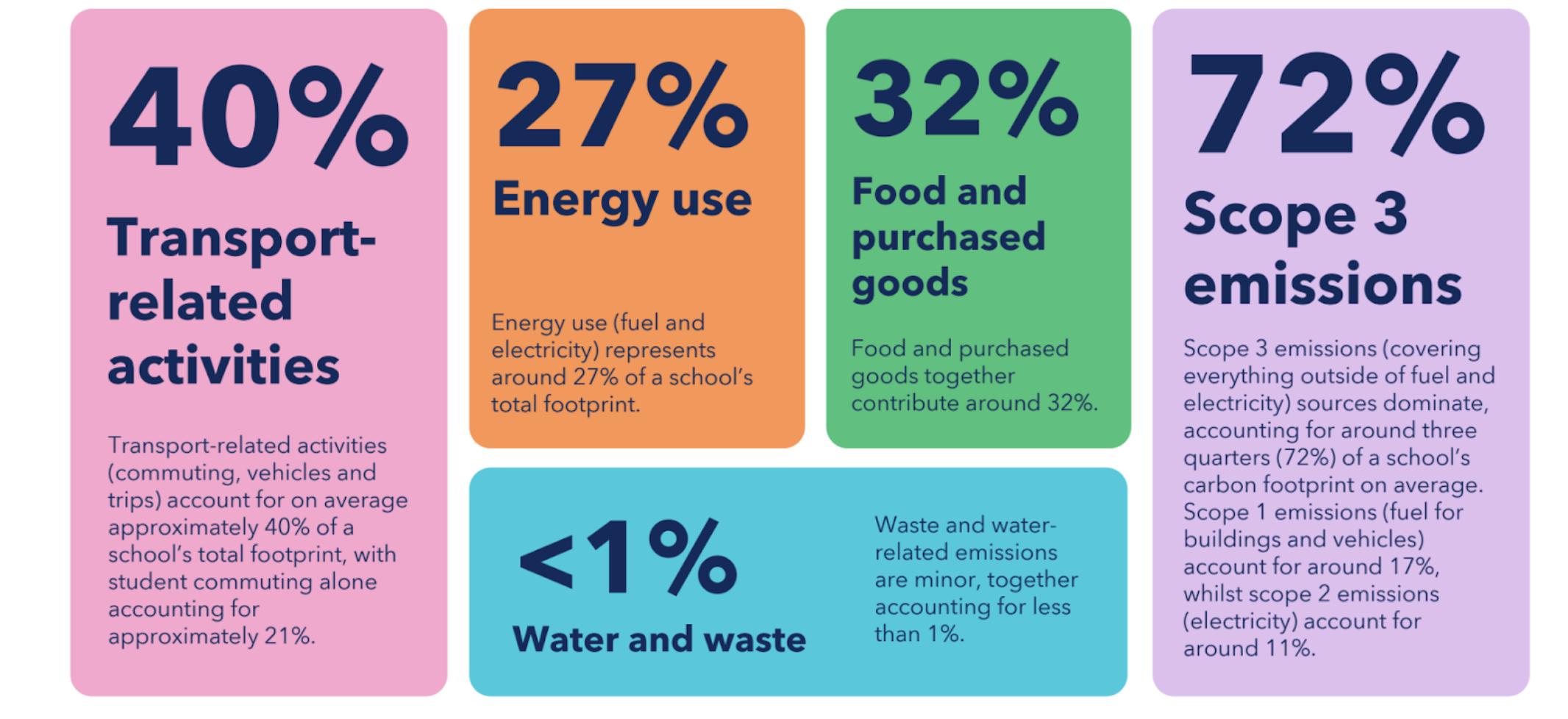
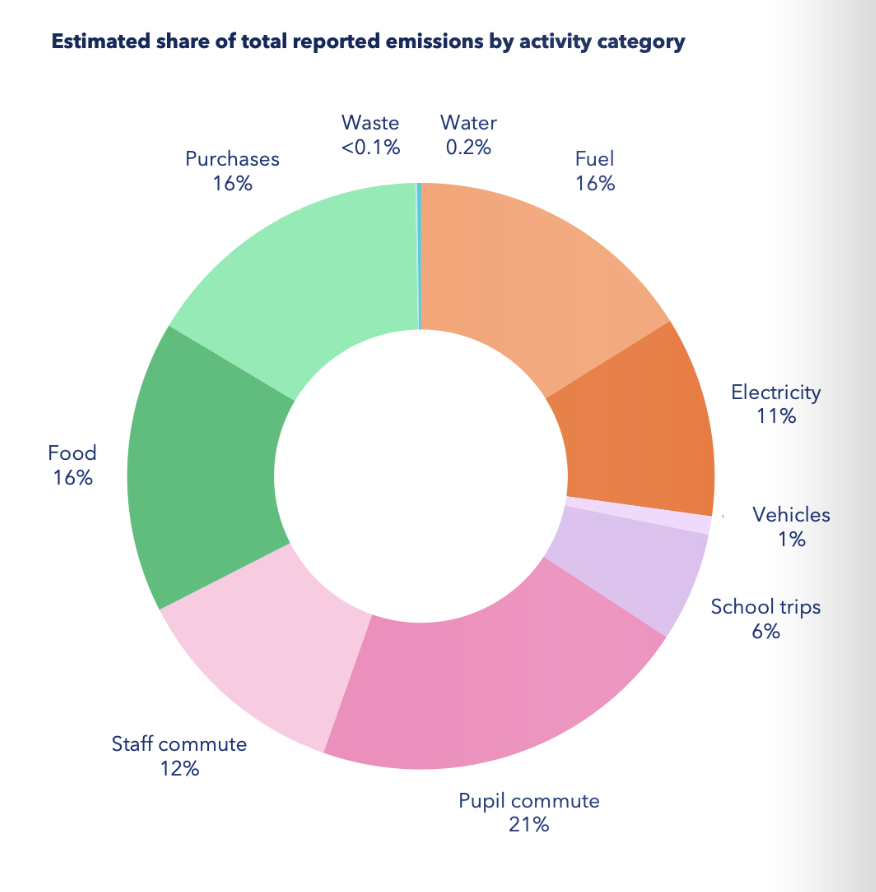
Transport is the largest source of emissions in schools, accounting for around 40% of the total footprint
Count Your Carbon statistics report 2026
“Pupil commuting alone contributes to about 21% of overall emissions,
making it the single largest source of emissions for schools.”
p.34, Count Your Carbon statistics report 2026.
Why transport became the hidden problem
Over the past decade, schools have made real progress on emissions they directly control, including energy efficiency improvements, increased use of renewable electricity, and even better waste and resource management.
As a result, emissions from these areas have become more efficient, and in many cases, reduced.
But transport hasn’t followed the same trajectory.
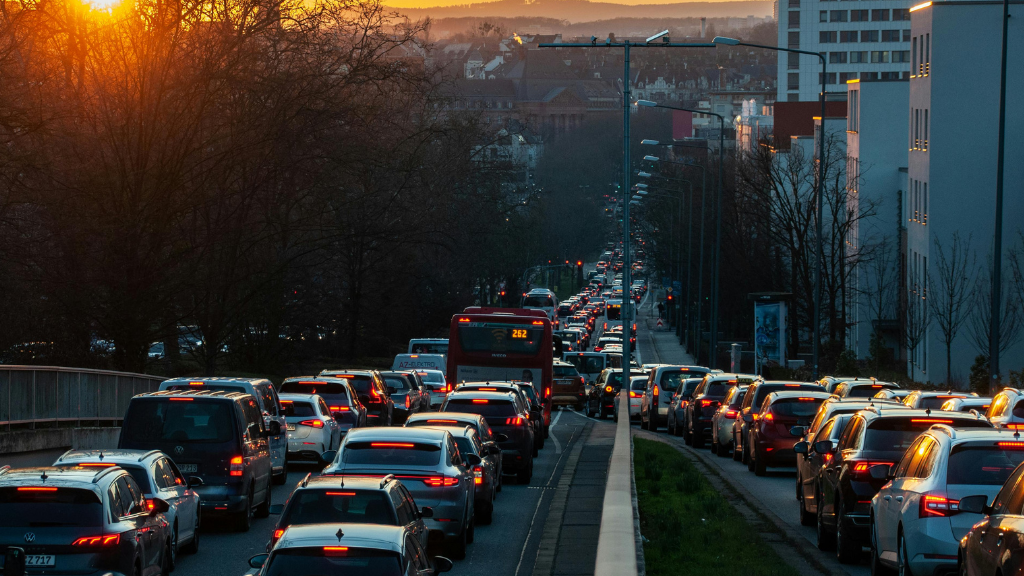
Unlike energy use or waste management, these emissions are largely Scope 3, meaning they sit outside the school’s direct control. Despite many schools pushing for parents to walk to school, the data suggests that more and more parents are choosing to take their children to school by car. Indeed, the current status quo is as follows:
- Car use for school journeys remains high
- Many trips are short but still made by car
- Most journeys are single-occupancy
This creates a structural imbalance we often see:
As emissions from buildings decrease, transport emissions remain high and seem to still be on the rise, therefore becoming the dominant source of emissions.
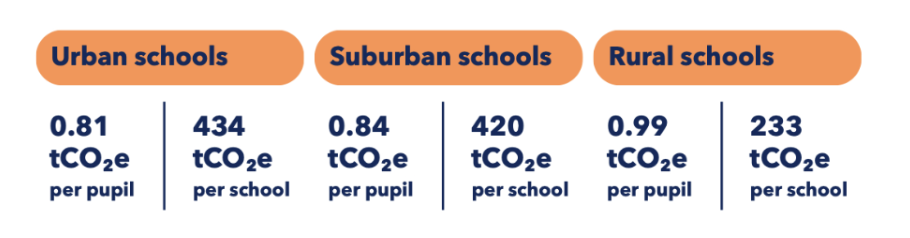
In other words, transport has simply not decreased at the same pace as everything else and has most likely been stagnant over the last two decades, whilst the other emissions have been tackled. The good news is that as more schools adopt their Climate Action Plans, we expect them to start to change priorities as they gain visibility over their own emissions. This is particularly the case for rural schools which often have parents coming from further away, and therefore produce more transport-related emissions, increasing the school’s total emissions.
Count Your Carbon statistics report 2026
Why transport matters beyond emissions
Reducing school run emissions isn’t just a climate issue. It affects:
- air quality around schools
- traffic congestion in cities
- parental stress and time pressure
- gender inequality (with mothers disproportionately carrying the load)
In summary, school transport has become the largest source of emissions because, unlike the other sectors, it was never fully addressed in the first place. This is largely due to a focus on more visible emitters, combined with limited awareness, measurement tools, and resources to tackle transport-related emissions.
As schools begin to understand their full carbon footprint, it’s clear that meaningful climate action will depend on tackling how we get to school, not just how schools are run, which isn’t an easy task.
If you think your school community would benefit from trying a carpooling solution for school runs, let us know here.
Want to stay updated and be first to hear about new solutions? Join our newsletter.
