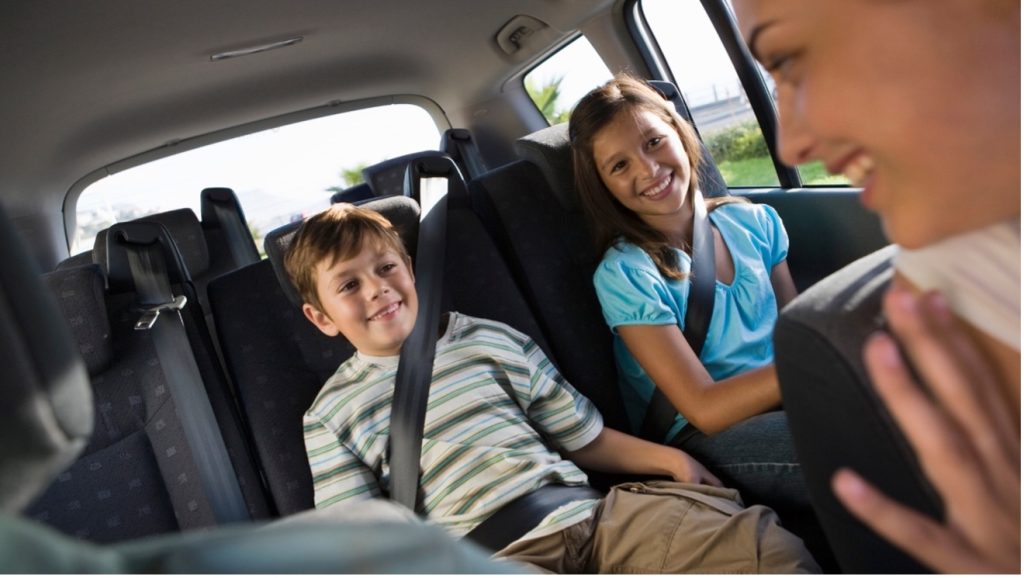
What is parent lift sharing?
Parent lift sharing is when families share school journeys, quite simple actually!
Instead of every parent driving separately, parents can coordinate lifts, share the school run, and reduce the number of cars arriving at the school gate. For many families, this is not about replacing walking, cycling or public transport. It is about helping the parents who need to drive make those journeys smarter.
At United Parents, we believe the school run should feel less stressful, less isolating and less car-dependent.
Why is the school run such a problem?
The school run is short, repetitive and concentrated into a small window of time. That makes it a major source of pressure for families, schools and local roads.
According to the Department for Transport, in 2024, 43% of trips to and from school for children aged 5 to 10 were made by car. For secondary-aged children, the figure was lower, but car use still remains a significant part of school travel in England.
Government guidance on School Streets also notes that, during term time, 25% of morning rush-hour car trips in London relate to school drop-offs, and that the figure may be even higher outside London.
This creates a familiar pattern: congestion outside school gates, unsafe parking, pressure on staff, frustrated residents, and stressed parents trying to get to work on time.

Why not just tell families to walk or cycle?
Walking, cycling and scooting should absolutely be encouraged where they are realistic. But the honest answer is that they do not work for every family.
Some parents live too far from school. Some have work shifts. Some have multiple children at different schools. Some have SEND needs, health needs, rural transport issues, or no safe walking route.
A strong school travel strategy should not rely on one solution. It should include walking, cycling, Park and Stride, public transport, School Streets where appropriate, and parent lift sharing for families who still need access to a car.
Parent lift sharing works best as a practical middle ground: fewer cars, without pretending that every family can stop driving tomorrow.
How can lift sharing reduce school traffic?
If two families who currently drive separately share one journey, one car is removed from the school run.
That sounds simple, but at school level the impact can add up quickly. If even a small proportion of car-dependent families share journeys regularly, schools could see fewer vehicles arriving at the same time each morning and afternoon.
For schools, that can mean:
- less congestion around the gate
- fewer parking conflicts
- safer arrival and pick-up times
- stronger parent-to-parent support
- better evidence for school travel plans
For parents, it can mean:
- fewer rushed mornings
- less fuel cost
- more flexibility around work
- help when something changes last-minute
- a stronger sense of community
For councils, it can support wider goals around congestion, air quality, active travel and demand management.
Is parent lift sharing safe?
This is where United Parents is different from informal arrangements. The goal is not to pressure families into sharing lifts with strangers. The goal is to help parents connect with other verified families from their own school community, with more visibility and control.
How can schools use parent lift sharing?
Schools do not need to manage every journey themselves. In fact, they should not be expected to take on more admin.
A good parent lift-sharing model should be light-touch for schools. The school’s role is mainly to help introduce the option to parents, support communication, and include it as part of wider travel planning.
For example, a school could use parent lift sharing alongside:
- School Travel Plans
- Modeshift STARS work
- Park and Stride schemes
- eco-school activity
- climate action plans
- attendance and punctuality support
- parent engagement campaigns
The strongest message to schools is this: parent lift sharing is not another burden. It is a tool to help families organise themselves more safely.
How can councils benefit?
Local authorities are under growing pressure on home-to-school transport, congestion and air quality.
The National Audit Office reported that, in 2023–24, local authorities in England spent £2.32 billion transporting children to school or college.
To be clear, parent lift sharing is not a replacement for statutory home-to-school transport, especially for children with SEND or families who are legally entitled to support.
But it could help councils earlier in the system by reducing avoidable car journeys, improving school travel data, supporting behaviour change, and creating community-based alternatives.
Who is parent lift sharing best suited for?
Parent lift sharing is most useful for families who:
- live too far to walk every day
- live near other families from the same school
- have children old enough to travel with another trusted parent
- struggle with work, timings or multiple drop-offs
- want a more affordable and lower-stress option
FAQ
What is school run lift sharing?
School run lift sharing is when parents from the same school community share journeys so that fewer families need to drive separately.
Is lift sharing the same as carpooling?
Yes.
Can lift sharing reduce school gate congestion?
Yes, where multiple families currently drive separately, sharing journeys can reduce the number of cars arriving at school during drop-off and pick-up.
Is parent lift sharing safe?
It can be safer when it is organised through a structured platform with verified parents, clear communication, consent, reporting tools and school-community boundaries.
Can schools promote lift sharing?
Yes. Schools can introduce lift sharing as part of their travel plan, sustainability work, parent engagement or congestion-reduction efforts, without managing every journey themselves.
Is lift sharing suitable for every family?
No. It is most suitable for families who already drive, live within a reasonable distance of other parents, and want a more flexible way to manage school journeys.